Filters

Changing any of the form inputs will cause the list of events to refresh with the filtered results.

  • Designing Digital Publications

    Université de Montréal 3150 Rue Jean Brillant, Montreal, Québec, Canada

    Led by: Dan Tracy and Mary Borgo Ton This course will focus on strategies for designing, building, and publishing long-form scholarship in fully digital formats. As we consider commonly-used platforms like Pressbooks, Omeka, and Scalar, we will discuss flexible writing workflows and best practices for developing a multimodal expressions of your research, regardless of medium. […]
  • NLP, LLMs, and Network Science Apps for Text and Media Analysis and Creativity

    Université de Montréal 3150 Rue Jean Brillant, Montreal, Québec, Canada

    Led by: Chris Tănăsescu The course offers an effective hands-on intro to natural language processing (NLP), text and media analysis, and text and/or media corpus network visualization and analysis. It will harness the power and amplitude of large language models (LLMs) alongside other computing resources in analyzing both single/discrete datums and big data, be they […]

  • Creating Digital Collections with Minimal Infrastructure: Hands On With CollectionBuilder for

    Université de Montréal 3150 Rue Jean Brillant, Montreal, Québec, Canada

    Teaching and ExhibitsOlivia Wikle, Evan Williamson, Devin Becker This course introduces fundamental web and DH skills using CollectionBuilder, an open source framework for building digital collection and exhibit websites driven by metadata and hosted on a lightweight infrastructure. The high cost and IT requirements of digital collection platforms are often a barrier to creating new […]

  • Agile Project Management for Humanities Research

    Université de Montréal 3150 Rue Jean Brillant, Montreal, Québec, Canada

    Led by: James Smith Agile project management is about negotiating the completion of a project from beginning to end while remaining flexible. Being patient and delaying decisions until you have to make them, gathering as much information as you can in the meantime, and then taking action with the information you have, always keeping alternatives […]

  • DH for Librarians

    Université de Montréal 3150 Rue Jean Brillant, Montreal, Québec, Canada

    Led by: John Russell and Rachel Hogan This course will focus on the processes and methods of digital humanities and how they intersect with librarianship practice. We will start by considering big picture questions: how have librarians approached “doing DH” and “supporting DH” in libraries, what has the practice of DH librarianship been, and what […]

  • Social Network Analysis (SNA) for Historical Research

    Université de Montréal 3150 Rue Jean Brillant, Montreal, Québec, Canada

    Led by: Shu Wan This course introduces the basic knowledge of social network analysis (SNA) to digital humanities scholars, especially historians. The course will consist of three parts. The first introduces the theory and terminology of SNA, centrality, its measurements, and other key SNA categories such as groups/subgroups, ego networks, and two-Mode networks. The second […]

  • Unveiling the Past: Advancing Knowledge of the Humanities and Special Collections through Multispectral Imaging

    Université de Montréal 3150 Rue Jean Brillant, Montreal, Québec, Canada

    Led by: Juilee Decker and David Messinger In the past, scholars applied lemon juice and a heat source when uncovering hidden features of historical documents (think: “National Treasure”). We now know that this method damaged artifacts unnecessarily. Interest in this field has led to newer, safer practices involving cameras, sensors, and LED panels. A low-cost, […]

  • Writing Nonfiction in the Company of Artificial Intelligences

    Université de Montréal 3150 Rue Jean Brillant, Montreal, Québec, Canada

    Led by: William J. Turkel This course is a hands-on introduction to using LLM technology (large language models like ChatGPT or Gemini) to assist with the practice of writing nonfiction. Popular discussions of this technology have focused on the unconstrained models’ tendencies to hallucinate, their inability to cite or return verifiable sources of information, and […]

  • Outils numériques et études littéraires: vers de nouvelles perspectives critiques 

    Université de Montréal 3150 Rue Jean Brillant, Montreal, Québec, Canada

    Led by: David Wrisley and Parham Aledavood Ce cours propose un aperçu des méthodes numériques appliquées aux études littéraires. Il s’adresse aux débutant·e·s intéressé·e·s par le potentiel du numérique dans leurs recherches et souhaitant découvrir une diversité de techniques. Nous explorerons des exemples novateurs de recherches en études littéraires, en abordant les méthodes et la […]

  • Data Bites – Optimize Directory Structures for Research Data

    Date: June 9 2025 This practical workshop, delivered by the UBC Library Research Data Management team, focuses on strategies for organizing research data using clear and logical directory structures. Designed for graduate students, researchers, and staff, the session helps participants manage files more effectively to support collaboration, reproducibility, and long-term data stewardship. Participants will learn how […]

  • Reproducible Research Practices and Tools

    Date: June 10 2025  Description: Have you ever tried to run someone else’s code and it just didn’t work? Have you ever been lost interpreting your colleague’s data? This hands-on session will provide researchers with tools and techniques to make their research process more transparent and reusable in remote computing environments. We’ll be using platforms like […]

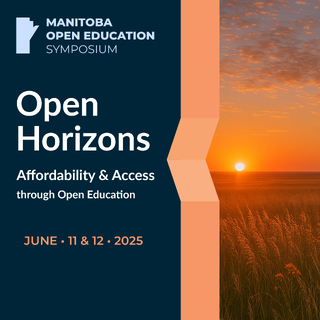
  • Creating OER with Students

    University of Manitoba 100 Innovation Drive, Winnipeg, Manitoba, Canada

    Led by Apurva Ashok (Rebus Foundation) Join us for a hands-on workshop where we will explore practical, fun, and effective strategies for co-creating Open Educational Resources (OER) with students. We’ll discover how open educational practices and renewable assignments can transform classroom dynamics by engaging students as active knowledge creators rather than passive participants. Together, we’ll […]